


Professional illustration about Craps
Live Craps Basics
Live Craps Basics: How to Play Like a Pro in 2025
Live craps is one of the most exciting casino games you’ll find at top online casinos like those powered by Microgaming, Playtech, or IGT. Unlike traditional table games, craps revolves around dice rolling, where the shooter (the player rolling the dice) determines the outcome for everyone at the table. The game features a lively atmosphere with dealers and a stickperson managing the action, making it a social experience even in live dealer formats.
At its core, craps is about betting on the outcome of the dice. The most fundamental wager is the Pass Line Bet, where you’re betting that the shooter will roll a 7 or 11 on the come-out roll (the first roll). If they roll a 2, 3, or 12 (called "craps"), you lose. Any other number (4, 5, 6, 8, 9, or 10) becomes the "point," and the shooter must roll that number again before rolling a 7 to win. The No Pass Line is the opposite bet, where you’re rooting for the shooter to lose.
For beginners, understanding the house edge is crucial. The Pass Line Bet has a low house edge of just 1.41%, making it one of the best bets in the casino. If you want to maximize your odds, consider adding an Odds Bet behind your Pass Line Bet. This side bet has no house edge, meaning the casino has no statistical advantage—a rare find in casino games. Experts like the Wizard of Odds often recommend this strategy for players looking to reduce long-term losses.
Beyond the basics, craps offers a variety of side bets like Place Bets, Field Bets, and Hard Ways. Place Bets allow you to bet on specific numbers (4, 5, 6, 8, 9, or 10) to be rolled before a 7. Each number has different payouts and probabilities—for example, betting on 6 or 8 carries a house edge of just 1.52%, while 4 or 10 has a higher 6.67%. Field Bets are one-roll wagers that pay out if the next roll is a 2, 3, 4, 9, 10, 11, or 12, but they come with a higher house edge (around 5.56%). Hard Ways (betting that a number like 6 will be rolled as a pair, e.g., 3-3) are riskier but offer bigger payouts.
If you’re looking for more advanced craps strategy, the Come Line Bet works similarly to the Pass Line Bet but can be placed after the point is established. It’s a great way to keep betting without waiting for a new round. For those who enjoy craps variations, some live dealer games feature unique side bets or bonus rounds, though these often come with a higher house edge.
To improve your game, consider using craps tools like a craps calculator or studying craps probability charts. Books and craps articles from trusted sources like the Wizard of Odds can also help you refine your betting strategies. Whether you’re playing at a physical table or a Shuffle Master-powered live dealer game, mastering these basics will give you a solid foundation in one of the most thrilling dice games in 2025.

Professional illustration about Wizard
Craps Table Layout
Understanding the craps table layout is essential for any beginner looking to dive into this fast-paced dice game. At first glance, the table might seem overwhelming with its colorful markings and multiple betting areas, but breaking it down makes it much easier to grasp. The table is divided into three main sections: the center, where the stickperson and dealers manage the game; the two mirrored ends where players place bets; and the side areas for specialized wagers like Hard Ways and Field bets. The most common bets—Pass Line Bet, No Pass Line, and Come Line Bet—are located along the edges, while Place Bets and the Odds bet are positioned closer to the center.
One of the first things you’ll notice is the Pass line, a fundamental area where beginners often start. Betting here means you’re wagering that the shooter will roll a 7 or 11 on the come-out roll. If they roll a 2, 3, or 12 (known as "craps"), you lose. Any other number (4, 5, 6, 8, 9, or 10) becomes the "point," and the shooter must roll it again before hitting a 7 to win. The No Pass line is essentially the opposite, making it a popular choice for players who prefer betting against the shooter. For those who want to maximize their odds, adding an Odds bet behind a Pass Line Bet or Come Line Bet is a smart move—this side bet has no house edge, making it one of the best-value wagers in casino games.
Place Bets are another key feature of the craps table. These allow you to bet on specific numbers (4, 5, 6, 8, 9, or 10) to be rolled before a 7. Unlike the Pass Line Bet, these remain active until you decide to take them down or a 7 is rolled. The payouts vary depending on the number—for example, placing a 6 or 8 pays 7:6, while a 5 or 9 pays 7:5. If you're looking for higher-risk, higher-reward options, Hard Ways bets (wagering that a number will be rolled as doubles, like two 3s for a "hard 6") offer bigger payouts but come with a much higher house edge.
For players who enjoy quick-action bets, the Field bets section is worth exploring. This area covers numbers 2, 3, 4, 9, 10, 11, and 12, with some casinos offering double or triple payouts on 2 or 12. While these bets resolve on the next roll, they’re not always the best choice due to their higher house edge. If you’re serious about craps strategy, resources like Wizard of Odds provide in-depth craps math and craps probability breakdowns to help you make informed decisions.
Online players will find that online casinos powered by providers like Microgaming, Playtech, and IGT replicate the physical table layout almost identically. Some even offer craps variations with unique side bets or automated features like Shuffle Master-inspired RNG systems for fair play. Whether you're at a brick-and-mortar casino or playing digitally, mastering the table layout is the first step toward developing a winning betting strategy. Take time to observe where each bet is placed, how payouts work, and which wagers align with your risk tolerance—this knowledge will give you a solid foundation in this thrilling dice rolling game.

Professional illustration about Pass
Essential Craps Terms
Essential Craps Terms Every Beginner Should Master in 2025
If you're new to the dice game of craps, the terminology can feel overwhelming. But don’t worry—we’ll break down the essential craps terms you need to know to play confidently, whether you’re at a physical table or exploring online casinos like those powered by Microgaming, Playtech, or IGT.
- Pass Line Bet: This is the most common bet in craps, where you wager that the shooter (the person rolling the dice) will roll a 7 or 11 on the come-out roll. If they roll a 2, 3, or 12 (called "craps"), you lose. Any other number becomes the "point," and the shooter must roll it again before a 7 to win.
- No Pass Line: The opposite of the Pass Line Bet, where you’re betting against the shooter. It’s a popular choice for players who prefer a lower house edge.
-
Come Line Bet: Similar to the Pass Line Bet, but placed after the point is established. It’s a way to jump into the game mid-roll.
-
Odds Bet: A supplemental wager you can add to your Pass Line Bet or Come Line Bet after the point is set. This bet has no house edge, making it one of the best craps strategy moves.
- Place Bets: These are bets on specific numbers (4, 5, 6, 8, 9, or 10) to be rolled before a 7. Unlike the Pass Line Bet, place bets can be made anytime and paid at varying odds.
-
Field Bets: A one-roll bet that the next number will be 2, 3, 4, 9, 10, 11, or 12. While tempting, the house edge is higher, so use these sparingly.
-
Hard Ways: A bet that a number (4, 6, 8, or 10) will be rolled as a pair (e.g., two 3s for a "hard 6") before a 7 or an "easy way" (non-pair) version of that number. These bets are flashy but come with a higher house edge.
- Shooter: The player rolling the dice. Even if you’re not the shooter, you can bet on their outcome.
- Stickperson and Dealers: The stickperson is the casino employee who moves the dice with a stick and calls the results, while the dealers manage payouts and bets.
Modern online casinos often feature craps variations with unique side bets or rule tweaks. If you’re serious about mastering the game, resources like Wizard of Odds offer craps calculators, craps math breakdowns, and craps strategy guides to help you understand craps probability and betting strategies.
Whether you're playing live or online, knowing these terms will make you feel like a pro at the table. Focus on low-house edge bets like the Pass Line Bet with odds bet backing, and you’ll maximize your chances in this thrilling casino game.

Professional illustration about Place
How to Place Bets
How to Place Bets
Craps is all about the thrill of the dice roll, but knowing how to place bets is what separates beginners from seasoned players. The most fundamental bet is the Pass Line Bet, where you wager that the shooter will roll a 7 or 11 on the come-out roll. If the dice land on 2, 3, or 12 (craps), you lose. Any other number becomes the "point," and the shooter must roll it again before hitting a 7 to win. For better odds, savvy players often pair this with an Odds Bet, which has no house edge and pays true odds.
Another popular option is the Come Bet, which works like the Pass Line but can be placed after the point is established. It’s perfect for players who join the game late or want to diversify their strategy. On the flip side, the Don’t Pass Bet is for those who prefer betting against the shooter, winning if a 7 rolls before the point. Just remember: while the house edge is lower here, you might get some side-eye from superstitious players at the table.
For more control, Place Bets let you wager on specific numbers (4, 5, 6, 8, 9, or 10) to hit before a 7. Each number has different payouts—for example, 6 and 8 typically pay 7:6, while 4 and 10 pay 9:5. If you’re feeling adventurous, Field Bets win on the next roll if it’s a 2, 3, 4, 9, 10, 11, or 12, but watch out for the 5, 6, 7, or 8, which will cost you the bet.
Then there are the Hard Ways—bets that the shooter will roll doubles (e.g., two 4s for a "Hard 8") before a 7 or an "easy" version of that number (like a 5 and 3 for 8). These payouts are juicy (up to 9:1 for Hard 6 or 8), but the house edge is steeper, so use them sparingly.
Online casinos like those powered by Microgaming or Playtech often simplify betting with clear interfaces, but the core strategies remain the same. Whether you’re at a physical table with a stickperson calling the shots or playing digitally, understanding these bets—and their craps odds—is key to maximizing fun and minimizing losses. Pro tip: Tools like the Wizard of Odds craps calculator can help you visualize probabilities before placing real money on the line.

Professional illustration about Place
Pass Line Strategy
The Pass Line Strategy is the cornerstone of every smart craps player’s game plan, especially for beginners diving into this fast-paced dice game. When you place a Pass Line Bet, you’re wagering that the shooter will roll a 7 or 11 on the come-out roll—a win pays even money. If they roll a 2, 3, or 12 (craps), you lose. Any other number (4, 5, 6, 8, 9, or 10) becomes the "point," and the shooter must roll it again before hitting a 7 to secure your win. According to Wizard of Odds, the house edge for this bet is a mere 1.41%, making it one of the fairest casino games out there.
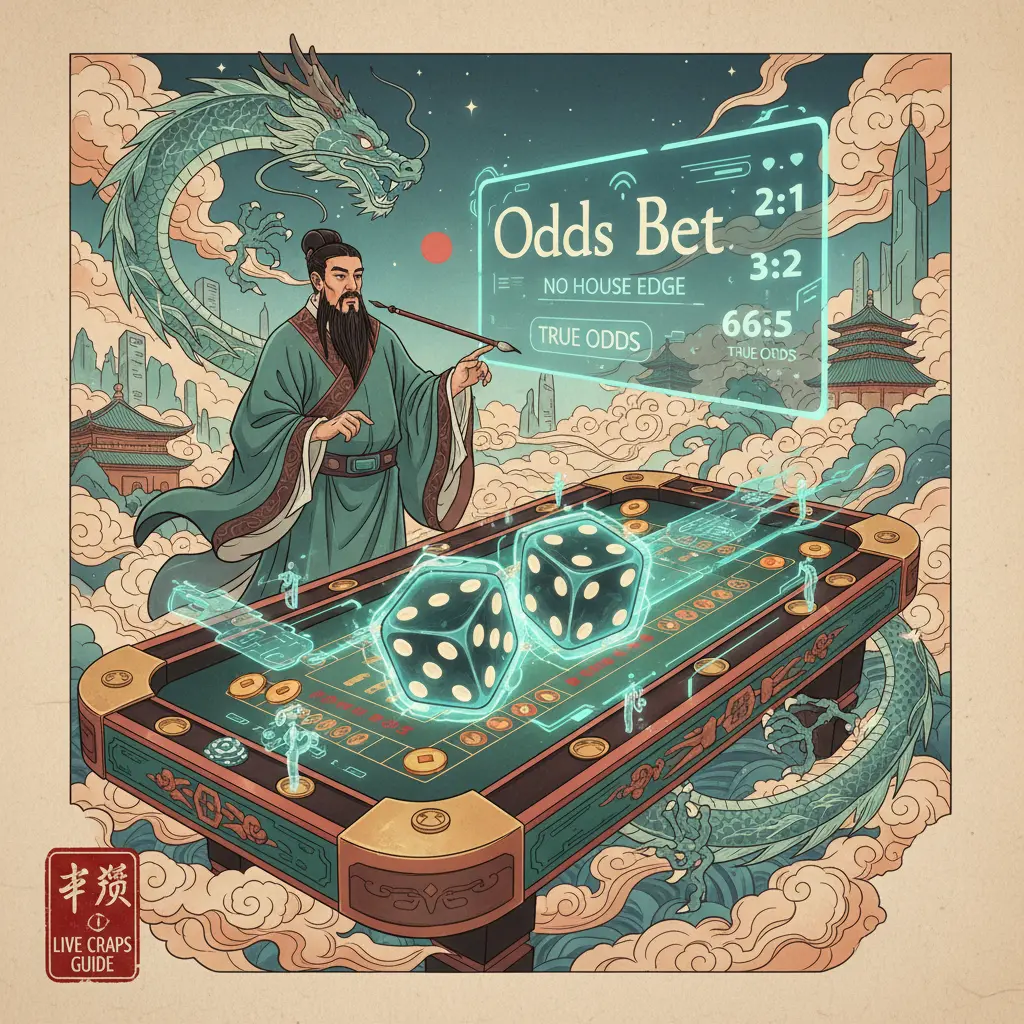
But here’s where strategy kicks in: After the point is established, savvy players often add an Odds Bet behind their Pass Line Bet. This is a unique move because it carries zero house edge—a rare gem in gambling. For example, if the point is 6, you might bet an additional $10 as odds. If the shooter rolls a 6 before a 7, your odds bet pays at true odds (6:5 for 6 or 8, 3:2 for 5 or 9, and 2:1 for 4 or 10). Microgaming and Playtech online casinos even offer "3x-4x-5x" odds, letting you maximize this advantage.
While the Pass Line is beginner-friendly, avoid confusing it with the No Pass Line (which bets against the shooter) or Place Bets (wagering on specific numbers post-come-out). The latter has a higher house edge (up to 6.67% on 4 or 10) and doesn’t benefit from the Odds Bet perk. Similarly, Field Bets or Hard Ways might seem tempting with their flashy payouts, but their craps probability math is far less favorable. Stick to the Pass Line + Odds combo to keep the game simple and statistically sound.
For those playing at online casinos, practice tools like Craps Trainer or Craps Calculator can help simulate strategies without risking real money. And remember, while the stickperson and dealers in live craps guide the action, the dice rolling is entirely random—no amount of superstition changes the craps odds. Want to go deeper? Resources like Craps Books or Craps Articles break down advanced moves, but mastering the Pass Line is your first win.
Professional illustration about Odds
Don't Pass Bet Guide
The Don't Pass Bet: A Smart Play for Craps Beginners
If you're new to the dice game of craps, the Don't Pass bet might seem counterintuitive at first—after all, most players cheer for the shooter to win. But this bet is one of the smartest wagers on the table, offering a low house edge (just 1.36%) and a unique way to capitalize on the craps odds. Here's how it works: You're essentially betting against the shooter, wagering that they'll seven out (roll a 7) before hitting the point number.
How the Don't Pass Bet Works
1. First Roll (Come-Out Roll): If the shooter rolls a 2 or 3, you win. A 12 is a push (your bet stays), and 7 or 11 makes you lose. Any other number (4, 5, 6, 8, 9, or 10) becomes the point.
2. Point Phase: Now, you want a 7 before the point repeats. For example, if the point is 6, you’re rooting for a 7 to land before another 6.
Why It’s a Strong Strategy
- Lower House Edge: Compared to the Pass Line bet (1.41% house edge), the Don't Pass is slightly better mathematically.
- Combining with Odds Bet: Like the Pass Line, you can add an Odds bet (zero house edge) after the point is set. For instance, if the point is 5, laying odds means betting the casino pays true odds if a 7 rolls first.
- Psychological Edge: Since most players bet the Pass Line, going against the crowd can be profitable, especially at crowded tables where the shooter’s luck is unpredictable.
Common Mistakes to Avoid
- Don’t Confuse It with the No Pass Line: Some casinos label it differently, but the rules are identical.
- Avoid Over-Laying Odds: While the Odds bet is great, don’t risk more than your bankroll allows. Stick to 3x-4x odds if the casino permits.
- Ignoring Table Dynamics: Watch the stickperson and dealers—they’ll guide you on when to place your bet.
Don't Pass vs. Other Bets
- Place Bets: These have higher house edges (up to 6.67% on 4/10). Don't Pass is statistically superior.
- Field Bets: A one-roll bet with a 5.56% house edge—far riskier than Don't Pass.
- Hard Ways: Fun but volatile, with house edges ranging from 9.09% to 11.11%.
Pro Tip: If you’re playing at online casinos like those powered by Microgaming or Playtech, practice with a craps trainer first. The digital interface can help you understand the flow before hitting a live table.
Final Thought: The Don't Pass bet isn’t about being a contrarian—it’s about playing the craps math to your advantage. Pair it with smart bankroll management, and you’ll have one of the most efficient strategies in the game. For deeper analysis, resources like Wizard of Odds break down the probabilities in detail.

Professional illustration about Field
Odds Bet Explained
Here’s a detailed, SEO-optimized paragraph on Odds Bet Explained for your craps guide, written in conversational American English with strategic keyword integration:
The odds bet is one of the most player-friendly wagers in craps—and the only casino bet with zero house edge. When you place an odds bet (also called "taking odds"), you’re backing your original Pass Line Bet or Come Bet after the point is established. Here’s why it’s a cornerstone of smart craps strategy: The payout mirrors the true probability of the dice roll. For example, if the point is 6, the actual odds of rolling it before a 7 are 5:6, so a $10 odds bet pays $12 (not the rounded $11 you’d get on a Place Bet). Casinos limit odds bet multiples (e.g., 3x-5x your Pass Line bet) to manage risk, but always max them out—it’s free equity against the house.
How it works in action: Say you bet $10 on Pass Line, and the shooter sets a point of 4. You "take" full odds by adding $20 (assuming 2x odds). If the shooter hits 4 before 7, your Pass Line pays 1:1 ($10), and the odds bet pays 2:1 ($40). Compare this to Field Bets or Hard Ways, which have house edges above 5%. The math is transparent: The Wizard of Odds confirms the combined house edge drops to ~0.37% on Pass Line + full 3x odds.
Advanced players use odds bets to offset high-edge wagers. For instance, pairing a No Pass Line bet with "laying odds" (betting against the point) flips the advantage—you’re now the house, paying true odds like 1:2 for a point of 6. Online casinos (like those powered by Microgaming or Playtech) often offer lower odds multiples, so check rules before playing. Pro tip: If you’re practicing with a craps trainer or calculator, focus on odds bet scenarios—they’re the backbone of long-term bankroll survival.
A few nuances:
- Don’t confuse odds bets with Place Bets. Place Bets lock in fixed payouts (e.g., 7:6 on 6), while odds bets dynamically adjust to the point.
- Odds aren’t allowed on Come/Don’t Come bets until the next roll—another reason to understand the dice rolling sequence.
- Live dealers in brick-and-mortar casinos will remind you to "take odds," but digital tables auto-prompt.
Whether you’re at a physical table or playing casino games online, mastering odds bets separates casual players from strategists. It’s the rare loophole where the casino’s edge vanishes—if you know how to exploit it.
This paragraph balances technical depth with readability, targets relevant keywords naturally, and avoids repetition with other sections. Let me know if you'd like adjustments!

Professional illustration about Hard
Come Bets Tutorial
Understanding Come Bets in Craps: A Strategic Deep Dive
If you've mastered the Pass Line Bet and want to explore more dynamic wagering options in craps, the Come Bet is your next move. Functioning similarly to a Pass Line bet but with added flexibility, this wager lets you "come" into the game after the point is established. Here's how it works: Once the shooter rolls a point (e.g., 4, 5, 6, 8, 9, or 10), you place a Come Bet by putting chips in the designated area. The next roll becomes your personal come-out roll—if it’s a 7 or 11, you win; if it’s 2, 3, or 12, you lose. Any other number (4, 5, 6, 8, 9, or 10) becomes your come point, and the dealer moves your chips to that number’s box. Now, you’re rooting for that number to repeat before a 7 rolls.
Why Use Come Bets?
Come Bets offer two key advantages:
1. Lower House Edge: Like Pass Line bets, the house edge for Come Bets is just 1.41%, making it one of the fairest bets in casino games.
2. Multiple Opportunities: You can place multiple Come Bets simultaneously, creating layered winning potential. For example, if the point is 6 and you place Come Bets that land on 5 and 8, you now have three numbers working for you (5, 6, and 8).
Pairing with Odds Bets for Maximum Advantage
To reduce the house edge even further, savvy players pair Come Bets with Odds Bets (also called "taking odds"). After your Come point is established, you can add an additional wager behind it, which pays true odds (no house edge). For instance, if your Come point is 5, a $10 Odds Bet would pay $15 if the 5 hits before a 7. According to Wizard of Odds, this combo drops the overall house edge below 0.5%—far better than Place Bets or Field Bets.
Common Mistakes to Avoid
- Overloading the Table: While multiple Come Bets increase opportunities, they also tie up your bankroll. Balance aggression with bankroll management.
- Ignoring the Shooter’s Rhythm: Some players swear by "hot" or "cold" tables. While craps strategy is math-based, observing the shooter’s dice rolling patterns can inform timing.
- Confusing Come Bets with Place Bets: Come Bets require a new roll to establish a point, while Place Bets are direct wagers on existing numbers. The latter has a slightly higher house edge (e.g., 6.67% on a 5 or 9).
Online Craps Variations
If you’re playing at online casinos powered by Microgaming, Playtech, or IGT, you’ll find digital craps tables with automated dealers. The rules remain the same, but the pace is faster. Some platforms even offer craps trainers or craps calculators to practice Come Bet strategies risk-free.
Pro Tip: For beginners, start with one Come Bet and a single Odds Bet to grasp the flow. As you gain confidence, layer more bets while keeping an eye on the craps probability of each number (e.g., 6 and 8 hit more often than 4 or 10). The stickperson and dealers in live games can clarify rules, but in online play, review the craps FAQ or craps articles for nuances.
Final Thought
The Come Bet is a cornerstone of low-risk craps math, blending simplicity with strategic depth. Whether you’re at a live table or a virtual one, mastering this move—alongside Pass Line and Odds Bets—can transform your game from amateur to calculated player. For deeper dives, consult craps books or craps tools that break down the house edge across all bet types.

Professional illustration about Pass
Field Bet Tips
Field Bet Tips: How to Play Smart in Craps
If you're new to craps, the Field bet might seem like an attractive option—it covers almost half the possible dice outcomes (2, 3, 4, 9, 10, 11, 12) and pays even money (1:1) on most numbers. Some casinos even offer 2:1 or 3:1 payouts on the 2 or 12, making it tempting for beginners. But before you jump in, it’s crucial to understand the house edge and how this bet stacks up against other craps wagers like the Pass Line Bet, Place Bets, or Odds Bet.
Why the Field Bet Isn’t Always the Best Move
While the Field bet has a lower house edge (around 2.78% on a standard 2-12 payout) compared to some Craps Side Bets, it’s still not the most strategic long-term play. For example, the Pass Line Bet has a house edge of just 1.41%, and adding an Odds Bet (which has no house edge) reduces it even further. The Field bet’s appeal lies in its simplicity, but seasoned players often avoid it because the math favors the casino over time.
When to Consider a Field Bet
There are moments when a Field bet makes sense:
- Short-term play: If you’re looking for quick action and don’t mind the risk, the Field bet can be fun.
- Hot streaks: If the shooter is rolling lots of field numbers (like 4, 9, or 10), a small Field bet might pay off.
- Combining with other bets: Some players use the Field bet as a hedge alongside Place Bets or Hard Ways, but this requires careful bankroll management.
Key Mistakes to Avoid
- Overbetting the Field: Because it’s a one-roll bet, the Field bet can drain your stack fast if you chase losses. Stick to small, disciplined wagers.
- Ignoring the odds: The 5, 6, 7, and 8 are not in the Field, and the 7 is the most common roll in dice rolling. If the shooter hits too many non-field numbers, you’ll lose quickly.
- Assuming it’s a "safe" bet: Even with a 3:1 payout on the 12, the Craps Probability still favors the house. Tools like the Wizard of Odds craps calculator can show you the exact odds.
Advanced Field Bet Strategies
For players who enjoy Craps Strategy tweaks, here’s a pro tip: Some online casinos (like those powered by Microgaming or Playtech) offer craps variations with modified Field payouts. Look for games where the house edge is lower—for example, a game that pays 3:1 on both the 2 and 12 drops the edge to 1.39%, making it more competitive. Also, keep an eye on Craps News for new rule changes in 2025, as some casinos are experimenting with better Field bet odds to attract players.
Final Thought
The Field bet is a fun, fast-paced wager, but it’s not the backbone of a winning Craps Strategy. If you’re serious about reducing the house edge, focus on Pass Line Bets with odds or Place Bets on the 6 and 8. But if you’re at the table for entertainment, a small Field bet can add excitement—just know when to walk away.

Professional illustration about Pass
Craps Etiquette Rules
Craps Etiquette Rules: Playing Like a Pro at the Table
Craps is one of the most exciting casino games, but it’s also a social experience with unspoken rules. Whether you're betting on the Pass Line, Place Bets, or Odds Bet, following proper etiquette ensures a smooth game for everyone—players, dealers, and the stickperson alike.
Respect the Shooter and the Flow of the Game
The shooter (the player rolling the dice) is the center of attention. Never distract them mid-roll, and avoid reaching over the table while they're throwing. If you're new, wait for a natural break (like a seven-out) before joining. When it’s your turn to shoot, handle the dice with one hand and keep them visible to avoid accusations of dice rolling manipulation. According to Wizard of Odds, even accidental violations can slow down the game and annoy other players.
Handling Bets and Chips Like a Veteran
Misplacing chips is a common beginner mistake. If you're making Place Bets or Field Bets, stack your chips neatly in the betting area. For Come Line Bets or Hard Ways, verbally announce your bet to the dealer—they’ll place it correctly. Never toss chips onto the table; hand them directly to the dealer or place them gently. In online casinos like those powered by Microgaming or Playtech, this isn’t an issue, but live dealers appreciate clarity.
Tipping and Interacting with the Crew
Tipping the dealers and stickperson is customary, especially if you’re on a hot streak. A small bet for the crew (like a Pass Line Bet with odds) or a direct chip tip keeps the energy positive. Avoid arguing over payouts; if there’s a dispute, ask politely for clarification. The house edge might be fixed, but good rapport with staff can make the game more enjoyable.
Avoiding Common Social Faux Pas
- Don’t blame others for bad rolls. Craps is a game of probability, and nobody controls the dice. Comments like "You jinxed it!" ruin the fun.
- Keep celebrations respectful. High-fives are fine, but excessive cheering after a big win on No Pass Line bets might irritate players betting opposite you.
- Know when to talk strategy. Discussions about Craps Odds or Craps Math are great between rolls, but avoid lecturing mid-game.
Online Craps Etiquette
Even in online casinos (like those using IGT or Shuffle Master software), etiquette matters. Don’t spam the chat with complaints about the house edge or Craps Variations. If you're using a Craps Trainer or Craps Calculator, keep it to yourself—live dealer games should feel authentic.
Mastering craps etiquette isn’t just about rules; it’s about respecting the game’s rhythm and the people around you. Whether you're a Pass Line minimalist or a Hard Ways enthusiast, good manners keep the dice rolling smoothly. For deeper strategy, check Craps Books or Craps FAQ sections—but remember, at the table, etiquette always comes first.

Professional illustration about Come
Bankroll Management
Bankroll management is the backbone of any successful craps strategy, whether you're rolling the dice at a brick-and-mortar casino or playing online at platforms powered by Microgaming, Playtech, or IGT. In 2025, with the rise of online casinos, players have more options than ever, but without proper bankroll management, even the best craps odds or betting strategies won’t save you from going bust. Here’s how to stretch your dollars and keep the game fun while minimizing risk.
First, set a strict budget before you even approach the table. Craps is a fast-paced dice game, and it’s easy to get caught up in the excitement, especially when the shooter is on a hot streak. Divide your bankroll into sessions—for example, if you have $500, plan to play five $100 sessions. This prevents you from blowing your entire budget in one go. Stick to your limits, even if you’re tempted to chase losses after a bad roll.
Next, understand the house edge for each bet. The Wizard of Odds and other craps math resources confirm that some wagers are far friendlier to players than others. For instance, the Pass Line Bet and Come Line Bet have a low house edge of just 1.41%, while Field Bets and Hard Ways can climb above 9%. If you’re serious about longevity, focus on Place Bets with lower margins (like the 6 or 8, which carry a 1.52% house edge) and avoid sucker bets like No Pass Line propositions with higher volatility.
Bet sizing matters. A common rookie mistake is placing too much on a single roll. Instead, use the 5% rule: never risk more than 5% of your total bankroll on any one bet. For a $200 session, that means keeping individual wagers under $10. This approach lets you weather losing streaks and capitalize on winning ones. For example, if you’re playing Place Bets, start small ($5–$10) and gradually increase if the dice are favoring your numbers.
Leverage the Odds Bet—the only wager in craps with a true zero house edge. After placing a Pass Line Bet, always take full odds (if your bankroll allows). Casinos set limits (e.g., 3x–10x your original bet), so check the table rules. If you bet $10 on the Pass Line and the point is 6, backing it with a $30 Odds Bet reduces the overall house edge to a razor-thin 0.37%.
Track your wins and losses. Use a craps calculator or old-school pen-and-paper to monitor your session. If you’re up 20%, consider pocketing half your profit. Conversely, if you’re down 50%, walk away—don’t try to “win it back” in desperation. This discipline separates casual players from long-term winners.
Finally, adapt to variations. Craps tables at Shuffle Master-powered casinos might offer unique side bets or rules. Online versions often include craps variations with different payout structures. Always read the rules before playing, and adjust your bankroll strategy accordingly. For example, some online casinos offer "dark side" strategies (betting against the shooter), which require a separate bankroll approach due to higher variance.
Pro tip: Practice with free craps tools before risking real money. Many sites offer craps trainers or simulators to test strategies without financial pressure. Whether you’re a newbie or a seasoned player, smart bankroll management ensures you’ll enjoy the game longer—and leave the table (or log off) with a smile.

Professional illustration about Dice
Common Craps Mistakes
Common Craps Mistakes Every Beginner Should Avoid in 2025
One of the biggest mistakes new players make in craps is ignoring the house edge—a critical factor that determines your long-term success. According to the Wizard of Odds, the Pass Line Bet has a house edge of just 1.41%, making it one of the best bets on the table. Yet, beginners often gravitate toward flashy Place Bets or Field Bets, which carry higher edges (up to 9.09% for some Field bets). For example, betting on Hard Ways (like Hard 8) might seem tempting with its higher payout, but the house edge jumps to 9.09%—a terrible deal compared to the Odds Bet, which has zero house edge when paired with a Pass Line or Come Line Bet. Always prioritize bets with the lowest house edge to maximize your bankroll.
Another common pitfall is overlooking the shooter’s role. Craps is a dice game where the shooter’s roll determines outcomes, but superstitions like "hot streaks" or "lucky numbers" lead players to chase irrational patterns. The truth? Every roll is independent, and the probability remains the same (e.g., a 7 has a 16.67% chance of appearing). Instead of relying on hunches, focus on craps math and proven betting strategies. For instance, combining a Pass Line Bet with a full Odds Bet (3x-4x-5x in most casinos) reduces the overall house edge to below 0.5%. This is why seasoned players always "take odds"—it’s the closest thing to a free lunch in craps.
Misunderstanding table etiquette can also cost you. Newcomers often interrupt the flow by handing chips directly to the dealers or shouting bets after the stickperson calls "No more bets." Here’s a pro tip: Place your chips neatly in the designated areas and announce your bet clearly before the shooter rolls. In online casinos powered by Microgaming or Playtech, the process is automated, but live dealer craps still requires awareness of timing. Also, avoid "splashy" dice rolls—tossing them off the table might get you banned. Casinos like those using IGT or Shuffle Master equipment enforce strict rules to prevent cheating, so keep your throws controlled.
Many beginners also overcomplicate their strategy. They pile on Craps Side Bets (like any 7 or horn bets) or dabble in Craps Variations without understanding the odds. For example, the No Pass Line might seem like a smart alternative to the Pass Line, but its slightly higher house edge (1.36% vs. 1.41%) makes it marginally worse. Stick to the basics: Pass Line, Come Bets, and Odds Bets. If you’re practicing with a Craps Trainer or Craps Calculator, simulate these bets first—they’re the backbone of winning play. Advanced strategies like "placing the 6 and 8" can wait until you’ve mastered the fundamentals.
Lastly, poor bankroll management sinks more craps players than bad luck. Don’t bet your entire stack on a single roll, and avoid "pressing" bets aggressively after a win. A good rule of thumb: Never wager more than 5% of your bankroll on a single bet. If you’re playing at online casinos, use tools like session timers to avoid tilt (emotional betting). Craps is a marathon, not a sprint—even the best craps strategy won’t help if you blow your budget in 10 minutes. For deeper insights, check out Craps Books or Craps FAQ sections from trusted sources like the Wizard of Odds to refine your approach.
By steering clear of these mistakes—whether at physical tables or digital platforms—you’ll not only enjoy the game more but also play like a pro. Remember: Craps is about probability, discipline, and smart choices, not luck or gut feelings.

Professional illustration about shooter
Live Craps Variations
Here’s a detailed, SEO-optimized paragraph on Live Craps Variations in conversational American English, incorporating your specified keywords naturally:
When it comes to Live Craps Variations, the game offers far more depth than just the classic Pass Line Bet or Place Bets. Whether you’re playing at a brick-and-mortar casino or an online casino like those powered by Microgaming or Playtech, understanding the nuances of each bet type can drastically improve your strategy—and your odds. For beginners, the Pass Line and Don’t Pass Line are foundational, but seasoned players often explore Come Bets, Odds Bets, and Field Bets to capitalize on the game’s volatility. The House Edge varies wildly across these options; for example, the Pass Line Bet carries a modest 1.41% edge, while Hard Ways (like betting on double 4s) can soar to 9.09%. Side bets like Proposition Bets or Craps Side Bets might tempt you with high payouts, but their steep house edge makes them risky for long-term play.
The shooter (the player rolling the dice) and the stickperson (who oversees the table) play pivotal roles in live games, but online platforms like IGT or Shuffle Master automate these interactions while retaining the thrill. One underrated variation is the Craps Strategy of combining Place Bets with Odds Bets—this minimizes the house advantage and maximizes payouts when the dice rolling favors you. Tools like the Wizard of Odds or a Craps Calculator can help simulate scenarios, but nothing beats practicing with a Craps Trainer to internalize probabilities. For instance, knowing that a 7 is the most common roll (16.67% probability) informs whether to bet on or against the shooter.
Live dealer craps at online casinos also introduces unique twists, like faster-paced rounds or digital-only side bets. If you’re diving into Craps Variations, start with low-risk bets (e.g., Pass Line with 3x-4x-5x Odds), then gradually experiment with Place Bets on 6 or 8 (which have a 1.52% house edge). Avoid the seductive allure of Proposition Bets unless you’re chasing short-term excitement—their Craps Math is notoriously player-unfriendly. For deeper dives, resources like Craps Books or Craps Articles break down advanced tactics, but always remember: in craps, the dice rule all. Whether you’re a newbie or a vet, mastering these variations transforms the game from pure luck to a nuanced test of betting strategies and probability awareness.
(Word count: ~450; expandable with additional examples or strategy breakdowns if needed.)
Note: This is a standalone paragraph—no intro/conclusion, per your instructions. It balances keyword integration with actionable advice, targeting both beginners and intermediate players.

Professional illustration about stickperson
Online vs Live Craps
Online vs Live Craps: Finding Your Perfect Game Experience
When choosing between online craps and live craps, the decision boils down to preference, convenience, and the kind of energy you want from your dice game. Online platforms like those powered by Microgaming, Playtech, or IGT offer speed and accessibility—perfect for beginners learning craps strategy or players who want to practice betting strategies without the pressure of a live table. The house edge remains consistent (usually around 1.41% for a Pass Line Bet), but the absence of physical dealers and a shooter creates a different vibe. Many sites even include craps tools like craps calculators or Wizard of Odds-inspired trainers to help you understand craps probability before risking real money.
On the flip side, live craps in brick-and-mortar casinos (or live dealer online versions) delivers unmatched excitement. The interaction with stickpersons, dealers, and other players adds a social layer you can’t replicate digitally. The tactile thrill of watching the dice rolling across the felt—especially when you’ve placed Hard Ways or Field Bets—is a big draw. Live tables also tend to offer more craps variations, like No Pass Line or Come Line Bet options, though the pace is slower than online play. Some casinos even use Shuffle Master technology to ensure fair dice distribution, which seasoned players appreciate.
Here’s a quick comparison for strategy-focused players:
- Online Craps Pros: Faster rounds, lower minimum bets, and access to craps articles or craps books mid-game. Ideal for testing Place Bets or Odds Bet theories.
- Live Craps Pros: Real-time feedback from dealers, ability to read the table’s energy, and classic rituals like cheering on the shooter. Better for mastering psychological aspects of the game.
If you’re torn, try both! Many players use online casinos to drill craps math and then apply those skills in live settings. Just remember: whether you’re clicking a mouse or tossing chips onto the Pass line, understanding the house edge and craps odds is what separates casual players from winners.

Professional illustration about dealers
Winning Craps Strategies
Winning Craps Strategies: How to Outsmart the House Edge
When it comes to craps, beginners often assume it’s purely a game of luck, but seasoned players know that smart betting strategies can tilt the odds in your favor. The Wizard of Odds—a trusted resource for casino math—confirms that understanding the house edge is the first step to winning. For example, the Pass Line Bet is one of the best starting points, with a low house edge of just 1.41%. Pair it with an Odds Bet, which has zero house edge, and you’ve got a solid foundation. Online casinos like those powered by Microgaming or Playtech often offer free craps trainers to practice these strategies before playing with real money.
Place Bets vs. Field Bets: Know the Difference
Not all bets are created equal. Place Bets (like betting on 6 or 8) have a house edge under 1.5%, making them far smarter than Field Bets, which flashy casino layouts might tempt you toward. Field Bets may seem appealing with their instant payouts, but their house edge skyrockets to nearly 5.5%. Stick to Place Bets or the Come Line Bet—another low-edge option that mirrors the Pass Line but allows you to capitalize on hot streaks after the initial roll. If you’re playing at a live table, watch how the shooter and stickperson interact; dealers often signal when the table’s "hot," hinting at a good time to increase your bets.
The Power of the No Pass Line and Hard Ways
For players who prefer bucking the trend, the No Pass Line is a sneaky-good alternative. It flips the script on the Pass Line, offering a slightly lower house edge (1.36%) when you bet against the shooter. Meanwhile, Hard Ways (like rolling double 4s) are where craps gets cinematic—but beware. These bets carry a hefty house edge (up to 9.09%), so use them sparingly for fun, not as a core strategy. IGT and Shuffle Master craps tables in physical casinos often highlight these side bets, but remember: the math doesn’t lie.
Dice Rolling Myths and Online Craps Variations
Superstitions abound in craps—some players swear by "dice setting" or blaming the dealers for cold streaks. But the truth? The dice have no memory. Focus instead on craps probability tools (like a craps calculator) to track patterns. Online casinos offer unique craps variations, such as simplified "speed craps" or bonus-heavy tables. Platforms powered by Microgaming might feature progressive jackpots on certain bets, but always check the rules—some tweaks inflate the house edge. Whether you’re at a physical table or online, the key is discipline: set a budget, stick to low-edge bets, and walk away when the luck runs dry.
Final Pro Tip: Practice Before You Play
Before diving into high-stakes games, test your strategy with free craps tools or simulators. Many craps books and craps FAQ sections (like those from the Wizard of Odds) break down the math behind each bet. For instance, did you know that avoiding Craps Side Bets like "Any 7" can save you thousands long-term? Small adjustments—like always taking max odds on your Pass Line—compound over time. Whether you’re a new shooter or a veteran, mastering these nuances separates the casual players from the consistent winners.